

Selling a website can be an effective way to turn months or years of work into money. Whether you own a profitable website, a small SaaS business, an e-commerce store, or an unfinished side project, finding the right buyer starts with choosing the right marketplace.
In this guide, you’ll learn how to sell a website online, prepare your digital asset for sale, estimate its value, attract serious buyers, and complete a transfer.
Where Can You Sell a Website for Free?
If you’re looking for a place to sell a website without upfront fees, start by comparing the marketplace’s listing costs, sales commissions, buyer audience, and transaction process.
Lunil is designed for owners who want to sell digital assets without paying Lunil listing fees or sales commissions. You can create a listing for your project, describe its business model and performance, and connect with potential buyers.
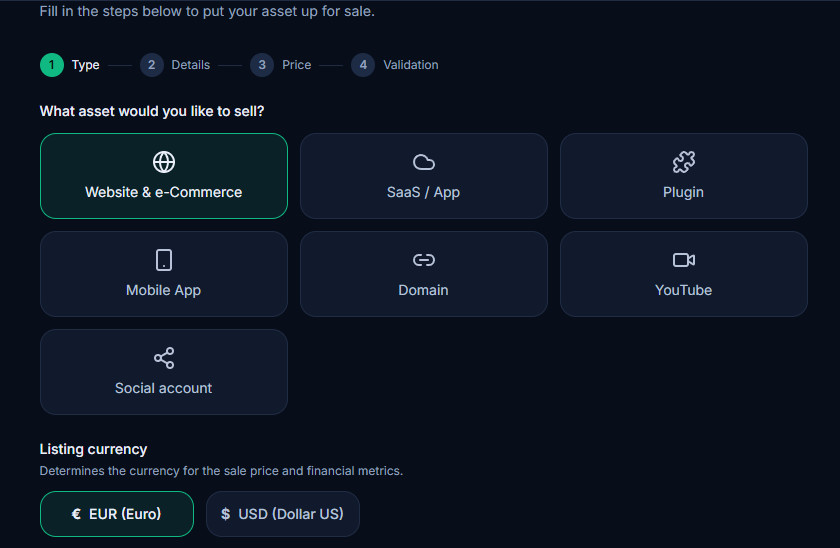
You can use Lunil to list different types of digital assets, including:
- Websites and blogs: Content websites, niche websites, affiliate websites, and SEO-driven projects.
- SaaS businesses: Subscription software, micro-SaaS products, and web applications.
- Side projects: Independent projects, MVPs, small online tools, and digital products.
- E-commerce businesses: Online stores built with platforms such as Shopify or WooCommerce.
- Plugins and applications: Software products, browser extensions, and other transferable digital tools.
- Domain names and online audiences: Digital assets that may have value to entrepreneurs and investors.
The right marketplace depends on the type of asset you’re selling, its current performance, and the buyers you’re trying to reach.
Ready to sell your website? Create your listing on Lunil and introduce your project to potential buyers.
Why Sell Your Website on Lunil?
When you sell a website, fees can reduce the amount of money you receive from the transaction. That’s why understanding a marketplace’s pricing model is important before publishing your listing.
Lunil offers a straightforward approach to selling digital assets.
1. List Your Website Without Lunil Listing Fees
You can publish your digital asset on Lunil without paying a listing fee to the platform. This makes it possible to test buyer interest without committing to an upfront listing expense.
Whether you’re selling a small blog, a SaaS application, or an independent side project, you can introduce your asset to potential buyers without paying Lunil to publish your listing.
2. Sell Without Lunil Sales Commissions
Lunil does not charge a commission on the sale price. This means there is no Lunil success fee deducted from the amount you negotiate with your buyer.
Always check the terms and costs of any additional third-party services you choose to use during the transaction.
3. Connect Directly With Potential Buyers
A successful website sale starts with a clear conversation between the seller and the buyer.
Use your listing to explain what your project does, who its customers are, how it generates revenue, and what the next owner could do with it.
Direct discussions can help both parties clarify the scope of the sale, review the available evidence, and agree on the terms.
4. Sell More Than Just a Website
Not every valuable digital asset is an established online business.
You might have built a micro-SaaS tool, launched a browser extension, developed a niche content website, or created a side project that you no longer have time to maintain.
Lunil supports a broad range of digital asset categories, giving founders different ways to present their projects to potential buyers.
5. Consider a Secure Transfer Process
Selling a website involves more than agreeing on a price. You may need to transfer a domain name, source code, hosting access, customer data, software licenses, or other business assets.
Lunil offers an integration with Escrow.com for users who want to use a third-party escrow service. An escrow arrangement can help coordinate the exchange of funds and assets under agreed conditions.
Check the provider’s eligibility requirements, transaction terms, and fees before proceeding. A marketplace listing alone does not guarantee a safe or successful transaction.
How to Sell a Website Online in 6 Steps
If you want to sell a website online, preparing your asset properly can make it easier for potential buyers to evaluate the opportunity.
Step 1: Decide What You’re Selling
Start by defining exactly what the buyer will receive.
Depending on your project, the sale might include:
- The website and domain name.
- The source code and software.
- An e-commerce store and its transferable assets.
- Content, designs, and intellectual property that you own.
- Documentation and operating procedures.
- Eligible business accounts or customer relationships.
Clearly identify what is included and what is excluded. Make sure you have the rights needed to transfer every asset in the deal.
Step 2: Gather Your Website Traffic and Revenue Data
Buyers want to understand how a website performs before deciding how much it is worth.
Prepare reliable information about:
- Monthly visitors and traffic sources.
- Search engine performance and organic traffic.
- Monthly revenue and operating expenses.
- Profit, where applicable.
- Customer numbers, subscriptions, and churn for SaaS businesses.
- Advertising, affiliate, subscription, or e-commerce revenue streams.
- Technical maintenance requirements and outstanding issues.
Historical data is particularly useful because it helps buyers distinguish sustainable performance from a temporary spike.
Only share information you are authorized to disclose, and protect confidential customer or business information.
Step 3: Estimate Your Website’s Value
The value of a website depends on more than its traffic.
Buyers may consider revenue, profit, growth, traffic quality, recurring income, competition, operating costs, and the amount of work required to maintain the business.
For a profitable website, one possible starting point is to compare its sustainable monthly profit with comparable sales.
For example, if a website generates €1,000 in monthly profit and a hypothetical buyer is willing to pay 30 times that monthly profit, the implied valuation would be €30,000.
This is only an illustration, not a universal valuation rule. Actual multiples vary considerably by business model, risk, growth, and market conditions. A website with no revenue may still have value, but the valuation will rely on different factors, such as its technology, audience, domain, or development potential.
Step 4: Create a Clear and Honest Listing
Your listing is often the first detailed impression a potential buyer has of your project.
Include:
- A descriptive title.
- A concise explanation of the business.
- The target audience and main use case.
- Your monetization model.
- Verified traffic and revenue figures, when available.
- Technology, integrations, and maintenance requirements.
- The asking price and what is included in the sale.
- Growth opportunities supported by realistic assumptions.
Avoid unsupported claims such as guaranteed future revenue or effortless growth. A transparent listing helps qualified buyers evaluate your project more efficiently.
Step 5: Answer Buyer Questions and Negotiate
Potential buyers may ask for additional information about your traffic, revenue, codebase, customer acquisition, or operating costs.
Respond with accurate evidence and explain any important limitations.
You should also agree on the purchase price, payment arrangements, assets included, transfer responsibilities, and any conditions that must be satisfied before the transaction closes.
For sensitive information, consider using appropriate confidentiality measures before sharing detailed business records or access to private systems.
Step 6: Transfer the Website and Complete the Sale
Once both parties agree on the terms, prepare a transfer checklist.
It may include:
- Domain ownership and DNS settings.
- Hosting and deployment access.
- Source code and repositories.
- Software documentation.
- Approved business account transfers.
- Relevant licenses and intellectual property rights.
- Analytics access and other agreed reporting assets.
Use a payment and transfer process appropriate to the transaction’s size and risk. For larger or more complex deals, consider professional legal and tax advice.
The sale is complete when the agreed payment and transfer conditions have been satisfied.
How to Sell a SaaS Business or Micro-SaaS Project
Selling a SaaS business requires additional preparation because the buyer is acquiring a software product and potentially an ongoing customer relationship.
If you want to sell a SaaS business online, organize information about the following metrics:
Monthly recurring revenue (MRR): The recurring subscription revenue generated each month.
Annual recurring revenue (ARR): An annualized measure of recurring revenue, often calculated as MRR multiplied by 12 for a stable subscription business.
Customer churn: The rate at which customers or subscriptions are lost over time.
Customer acquisition cost (CAC): The cost of acquiring a customer.
Gross margin: The revenue remaining after the direct costs of providing the service.
Technical dependencies: Hosting costs, third-party APIs, software licenses, and maintenance requirements.
You should also document the product’s core features, customer use cases, development roadmap, and known technical limitations.
If your SaaS is a small project with limited revenue, don’t assume that it has no value. A buyer might be interested in its codebase, niche audience, functionality, or potential to complement an existing business. However, you should describe these opportunities honestly rather than presenting hypothetical growth as established performance.
Can You Sell a Side Project That Doesn’t Make Money?
Yes. A side project does not necessarily need to generate revenue to be worth selling.
For example, you might have developed a working MVP, launched a niche website, built a small productivity tool, or created a plugin that you no longer have time to develop.
Potential buyers may be interested in:
- A working product that saves development time.
- A domain name relevant to their business.
- An existing audience or search engine presence.
- A codebase that can be extended.
- A product that complements their current services.
- An idea that has already been validated through early users or feedback.
To improve your chances of finding a buyer, explain what works today, what remains unfinished, and what resources would be required to continue development.
A transparent description is usually more useful than an exaggerated valuation based on hypothetical future success.
How to Make Your Website More Attractive to Buyers
Before publishing your listing, take time to improve the quality of the information you provide.
Present verifiable performance
Where possible, support your traffic and revenue claims with reliable analytics and financial records. Buyers need to understand both the results and how those results were achieved.
Explain how the website makes money
Describe your monetization model clearly. A site that earns through affiliate marketing, advertising, subscriptions, or product sales should explain its main revenue sources and associated costs.
Reduce operational complexity
Document routine tasks, hosting requirements, integrations, and maintenance procedures. A business that is easier to understand may be easier for a new owner to evaluate and operate.
Be transparent about risks
Disclose important dependencies, declining traffic, technical debt, contractual restrictions, or other material issues. If needed, feel free to use our digital asset sales contract generator, which will guide you.
Set a realistic asking price
Research comparable businesses and consider the quality of your financial records, growth prospects, and transfer requirements. Be prepared to explain how you arrived at your asking price. Check out our article on the 7 criteria for estimating the price of a website or e-commerce.
Where to Sell a Website: What Should You Compare?
Not every website selling platform serves the same type of seller.
When comparing marketplaces, consider the following criteria:
| Criterion | What to check |
|---|---|
| Listing fees | Can you publish your website without paying upfront? |
| Sales commission | Does the platform deduct a percentage when you sell? |
| Asset categories | Can you list websites, SaaS products, and side projects? |
| Buyer audience | Does the marketplace attract buyers interested in your asset type? |
| Listing requirements | Does your project need a minimum revenue or operating history? |
| Transaction process | How will payment, due diligence, and asset transfer be handled? |
| Seller control | Can you communicate directly with interested buyers? |
For sellers who want to avoid marketplace listing fees and sales commissions, Lunil is one option to consider.
More specialized brokerage services may be suitable for larger or more complex businesses that need valuation support, buyer screening, or professional transaction management. Compare the services and costs against your actual needs before choosing a platform.
Frequently Asked Questions About Selling a Website
Where can I sell a website for free?
You can list a website on Lunil without paying Lunil listing fees or sales commissions. The platform supports websites, SaaS businesses, side projects, and other digital assets. Review any optional third-party services separately, as they may have their own fees.
Can I sell my website without paying a commission?
Yes. Lunil does not charge a sales commission on the agreed sale price. Other services you choose to use during a transaction may charge separate fees.
What is the best marketplace to sell a website?
The best marketplace depends on your website’s size, business model, revenue, and target buyers. Compare listing costs, sales commissions, supported asset categories, buyer reach, and transaction support before making your decision.
How much is my website worth?
A website’s value depends on factors such as sustainable profit, revenue, traffic quality, growth, operating costs, and business risk. Profitable websites are sometimes valued using a multiple of monthly or annual profit, but there is no universal multiple that applies to every website.
Can I sell a website with no revenue?
Yes. A website without revenue may still have value because of its domain, code, audience, content, functionality, or development potential. Buyers will usually evaluate what already exists and how much work is needed to turn the project into a viable business.
Can I sell a SaaS business on Lunil?
Lunil supports listings for SaaS businesses and web applications. Prepare information about your product, recurring revenue if applicable, customer base, technical stack, operating costs, and the assets included in the sale.
How do I sell a side project?
Define what you’re selling, document the current state of the project, prepare evidence of any existing traction, set a realistic asking price, and publish a clear listing on a suitable marketplace. Explain what the buyer receives and what remains to be done.
How can I sell a website safely?
Verify the buyer’s requirements, agree on the exact assets being transferred, document the purchase terms, and use an appropriate payment and transfer process. A third-party escrow service can help coordinate payment and delivery, but you should review its conditions and fees before using it.
Do I need a profitable website to sell it?
No. Profitability can make a business easier to evaluate, but buyers may also acquire early-stage projects, software, domains, or websites with development potential. Your asking price should reflect the asset’s current condition and the evidence available.
How long does it take to sell a website?
There is no fixed timeline. The sale may depend on the asking price, the quality of the listing, buyer demand, the complexity of due diligence, and the time required to negotiate and transfer the assets.
Ready to Sell Your Website?
You don’t need to build a large company to have a digital asset worth selling. A niche website, a profitable blog, a micro-SaaS application, or a side project may all represent an opportunity for the right buyer.
The first step is to prepare an accurate listing, explain the value of your project, and choose a marketplace whose pricing model and process suit your needs.
Lunil lets you list your website, SaaS business, or side project without Lunil listing fees or sales commissions.
Create your listing, present your project clearly, and start connecting with potential buyers.